
Esther van Garderen | Fietsersbond
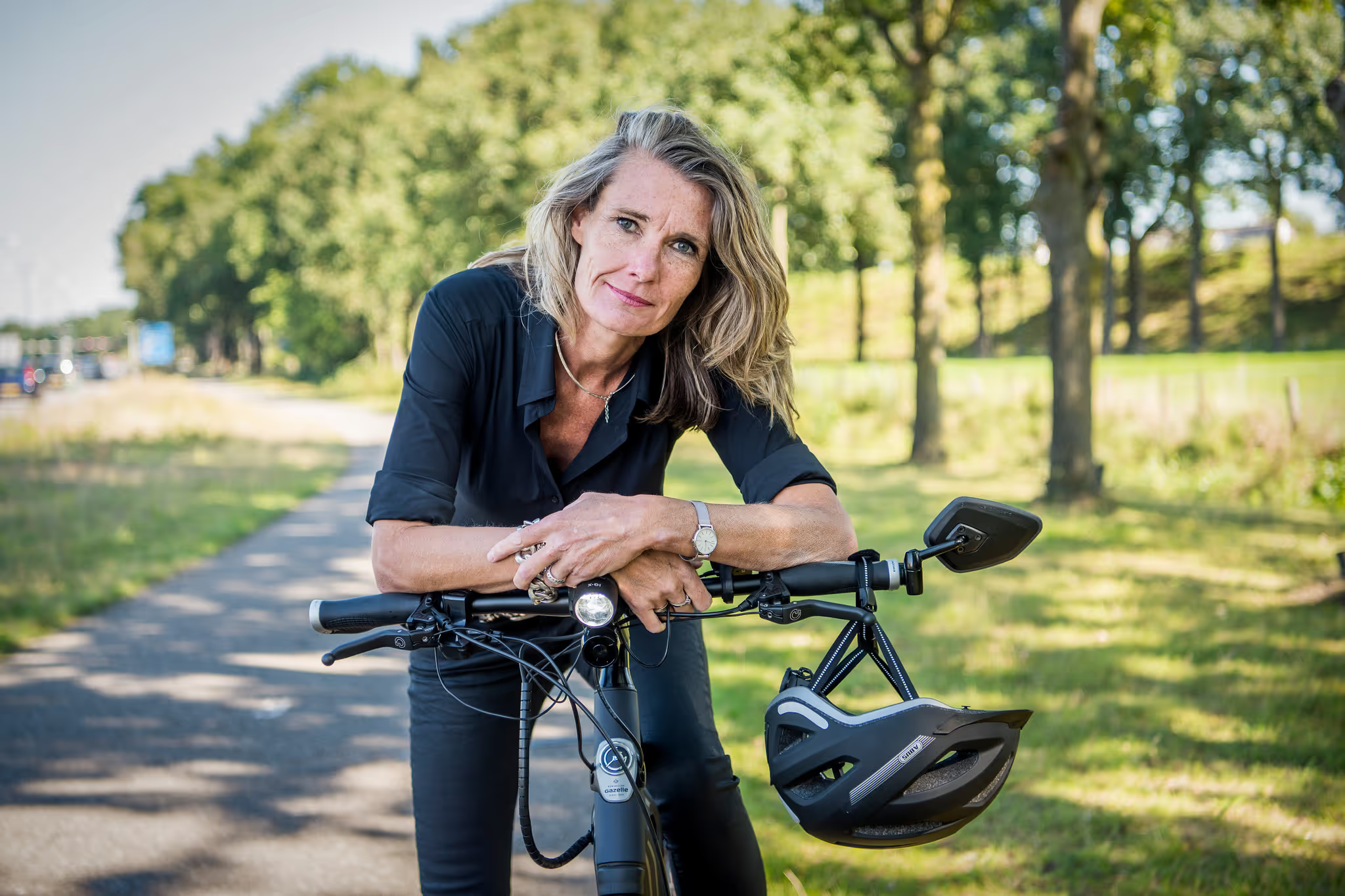
“What I want is to combine smart negotiation with that old-school activism.” Esther van Garderen has been serving as executive director of the Fietsersbond for over a year now. She is driven and has a passion for cycling—or rather, for what cycling symbolizes and can mean for our society. “I have the best job in the Netherlands,” she says.
Oh, really? The best job in the Netherlands?
“I was a civil servant for 25 years, and as a civil servant, you’re of course allowed to advise the mayor and aldermen, and you always try to influence them a little, but ultimately they’re the ones who make the decisions. Now I’m at the helm of a smart, active, and efficient organization that’s in a very strong position in many areas. For example, I recently had a meeting at the ministry, and I said, “We’re not going to turn the bike path into the drain of the traffic system, are we?” “Now, now, now, now,” the director-general replied. “Yeah, I’m not a civil servant anymore, so I can just say this—you can’t.” That makes it a lot of fun.”
A little bit rebellious?
“I like to defy authority. Even as a child, I had a very strong will. I’m the youngest of five children and the only one who went to college. My parents weren’t in favor of that because I was a girl. But I enrolled in political science anyway.”
How do they view what you do these days?
“My mom says all the time, ‘What a job…’ I had to have a difficult discussion about helmets live on RTL1, and then my mom gets all concerned: ‘Are you sure you should be doing that, sweetie?’ But she really likes it when people around her say, “I saw Esther on RTL News.” The fact that I have a family with four kids and still work full-time—she sometimes finds that a bit difficult to handle. Still, I do it. I see them as two different things that I’m both very passionate about. You just have to organize things well. So at school, you shouldn’t be the “head lice mom,” but the “class mom”—because she gets everyone to pitch in.’
A golden management tip—what else do you do to maintain a balance?
“You can do this job seven days a week—and that happens regularly—but I’ve made a very conscious decision never to schedule appointments on Fridays. It’s not that I don’t work then, but I just want to set aside one day a week for myself. Before you know it, you get swallowed up, dragged into the swamp. I’ve hired a coach; once every six weeks, I go for a two-hour walk with him on Friday mornings. He’s very strict with me to make sure I stay on track, but then—to put it bluntly—I can also “vent a little.” In addition, I occasionally organize peer review sessions for myself with other fellow directors.
Okay, but why focus specifically on that bike?
“ I recently saw a photo of a bike with the caption: ‘This machine fights climate change.’ All climate plans always include the electrification of cars, but of course there’s a step that comes before that: walk and bike. At the Cyclists’ Union, you’re actively working to make the Netherlands a little bit better and people a little bit healthier. It’s not about squeezing in a 4-meter-long bike path made of red asphalt somewhere out of the way, but about putting things in the right places so that people live within biking distance of their work, their school, their sports… Dutch children are the happiest children on earth. Why? Because they’re allowed to ride their bikes themselves.’
"Cycling gives you freedom, and cycling gives you choices."
“‘You had me when you said you see the bicycle as a powerful force for empowerment,’ said the recruiter from Colourful People. Cycling gives you freedom, and cycling gives you choices. When a woman with a non-Western immigrant background learns to ride a bike, she can run her own errands or send her child to the school of her choice—it gives her freedom and independence. That emancipatory effect it has always had for women is something I want to champion among immigrants in the coming year.”
So cycling is all about diversity, too! What have you learned about diversity within the Cyclists’ Union as an organization?
“We’re not very diverse in terms of race right now, but we do have a mix of young and old, and we try to hire interns eight times a year. We also have two employees receiving a UWV supplement. One of them is a man with autism, and he has a very unique perspective on people: “It’s in the eye of the beholder”—it’snot what you see with your eyes but with your heart. He can also give brutally honest feedback that’s simply spot-on, which is really great. For example, on Thursday mornings we have a Zoom meeting with the entire national office—that’s a lot of people on one screen. We were participating in the “walk-around challenge” at the time, so one of the girls had said, “Then we’ll go for a walk every Thursday while we’re in the meeting.” After two meetings, that guy suddenly chimed in: “Can I ask something? Could you please stop with that walk-around or turn off your video? Because all those moving images are driving me absolutely crazy.” “Oh, sure, of course.” I tend to gloss over things very quickly, but he doesn’t. He has such great insights and a great sense of humor—that has definitely enriched my life.”
Suppose I were to interview you again in two years—what do you hope to have accomplished by then?
“That the Cyclists’ Union is better known among a wider group of people and that there’s greater awareness of the cool things we’re accomplishing. Everyone always thinks that cycling in the Netherlands is a given, but the Cyclists’ Union was founded in ’75 because back then, all levels of government were seriously planning to give every worker an Opel Kadett or have them take the bus—there was no room for bicycles in the system at all. Even now, at the societal level, I want cycling to be taken seriously when it comes to investments. You know what I want? To combine smart negotiation with that old-school activism. When I give talks to young people and show photos of the Museumplein where everyone is lying on their bikes—students and hippies—it really resonates with them. Outwardly, we could certainly show a bit more guts and daring in challenging the status quo.”


