
Bora Sirin | Maas Theater and Dance
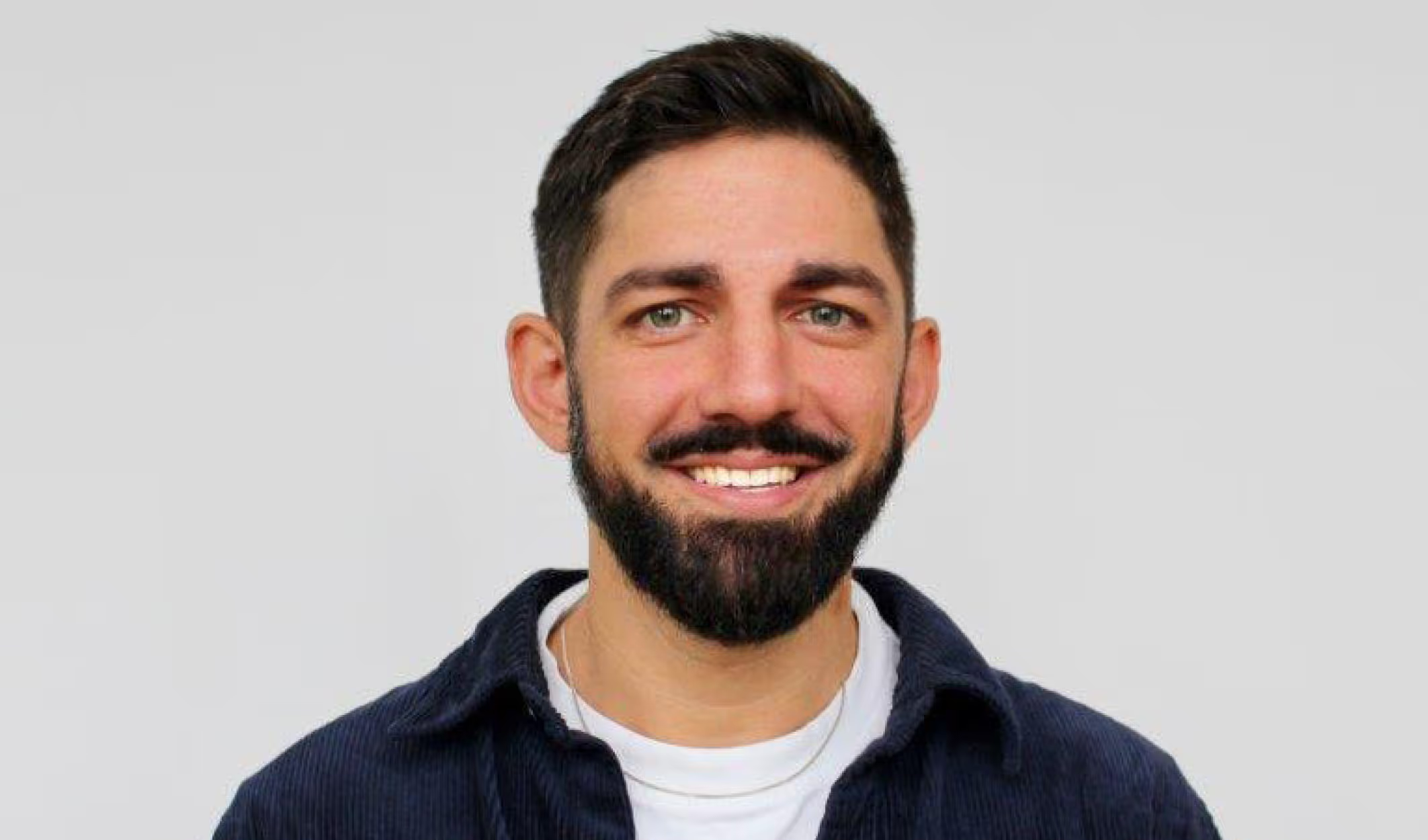
“How can we better engage diverse groups so that, instead of being a stage or a company, we can be a home?” From being on stage to providing a platform for diversity issues for a mixed audience. Bora Sirin has been working as head of communications at Maas Theater and Dance in Rotterdam for the past three months. By his own admission, he is a “theater fanatic,” clearly itching to seize every opportunity he sees.
How do you go from being a theater fanatic to working in theater communications?
“I started out as a professional dancer, but life as a dancer is pretty tough and not exactly stable. I found that difficult, so at some point I decided to pursue a master’s degree, and that’s how I ended up in marketing communications. At first, I worked in the corporate world, but eventually I realized: I enjoy marketing communications work in and of itself, but I’m not doing it for the things I care about. Since I came from the dance world and theater was really my thing growing up, I figured I needed to go back to the cultural sector. It might not be the highest-paying sector to work in, but it’s a really fun one. I enjoy myself a lot more than I did in the corporate world, and I feel a stronger connection with the people—and, of course, with the product.”
That’s quite something, starting a second career at 36.
“A career change isn’t equally easy or obvious for all dancers. So I’m glad I’ve found something new that I’m passionate about, and I’m pretty proud that I’ve worked my way up to department head and member of the management team in a relatively short time.”
So now you’re leaving Amsterdam for a new job in Rotterdam—are you excited?
“Yes, I did hesitate for a moment—the commute is pretty long. I actually didn’t feel any need at all to leave Amsterdam for work—I really liked my job and my coworkers. I had a permanent contract, and with the pandemic, why would I leave? But I realized pretty quickly that what Maas was looking for was right up my alley. The challenge and potential I saw ultimately won me over.”
“The challenge and the potential were what won me over.”
“I was already familiar with Maas, and I was impressed by their approach to marketing—it was structured and professional. I’d like to work for an organization where I believe in the product, but also where I think what they’re already doing is excellent. I enjoy figuring out how I can combine that with my own vision and style to create something that also works well for Maas.”
Have you come up with any great plans over the past three months?
“Well, I do have some ideas. I want to focus more on atmosphere and content and a little less on traditional marketing techniques—in other words, moving from standardized to customized. I also want to explore how we can make a much stronger statement as an organization and better convey what we stand for. Basically, creating content to tell a better story.”
What’s this story about Maas? What do they stand for?
“I think it’s the focus on the unusual and the minority that makes Maas special. We look at the different groups we create for and with, and how we can convey that ‘for-and-by-the-creators’ feeling to our audience as well. How can we better involve diverse groups, so that instead of being a stage or a company, we can be a home?”
“I don’t think we’ve been very successful at that so far, and that’s something I’d really like to work on. I think we’re explicitly queer as an organization, but we don’t see that reflected yet in the people who come through our doors. Even though Rotterdam is much more diverse than Amsterdam, our audience is still predominantly white. We could be a bit bolder in that regard; a good example is the weekend we organized last Sinterklaas: “Maas Doesn’t Believe in Sinterklaas,” featuring programs and performances about discrimination and inequality. Opposing Black Pete isn’t all that shocking anymore, but we’ve broadened the discussion a bit: ‘How can Sinterklaas be for everyone?’
How do you plan to reach such a diverse audience?
“To appeal to a different audience, you also need more diversity within the organization. I think I’m better able to connect with those two target groups than what might have been possible within the organization so far, because I have a Turkish background and I’m queer. When you’re part of the community yourself, it’s so much easier to connect with the target group. You have to be able to speak the language. Growing up with a non-blonde, non-Dutch appearance makes you view the world differently and causes others to treat you differently. In two ways, I don’t really fit into society, which makes you more sensitive to issues surrounding minorities.”
Is there a particular issue at the top of your wish list?
“There isn’t really just one question. We’re mainly looking at how we can work more thematically, for example—so we might do a weekend on hip-hop, or a weekend on queer and gender topics; there’s also going to be a summer festival about the circus. Within those different themes, I find it interesting to explore how we can bring diversity issues to the forefront more clearly without framing them. Instead of saying, “This is queer,” I want to present things alongside it that aren’t queer, so we can ask: “How non-queer is this, then? What does that mean? What is queer, anyway?” So that you end up raising more questions than you answer.’
“That we ask the right questions through our work and that we reach the right people. That’s what matters most.”
What do you hope to achieve over the next two years?
“Ultimately, for me, it’s not so much about whether enough tickets have been sold for a performance or whether we win an award for best production. Do we feel that we’re asking the right questions through our work and that we’re reaching the right people? I think that’s what matters most.”


